“The Industrial Revolution took a full century to fundamentally transform human society. Artificial General Intelligence (AGI), however, will have an impact 10 times more powerful, and these changes will take place in just 10 years.”
— Demis Hassabis
Demis Hassabis, head of Google DeepMind, shared his insights on when AGI might emerge, its impact on the economy and the labor market, limitations in AI development, energy requirements, and its potential in science.
What is AGI?
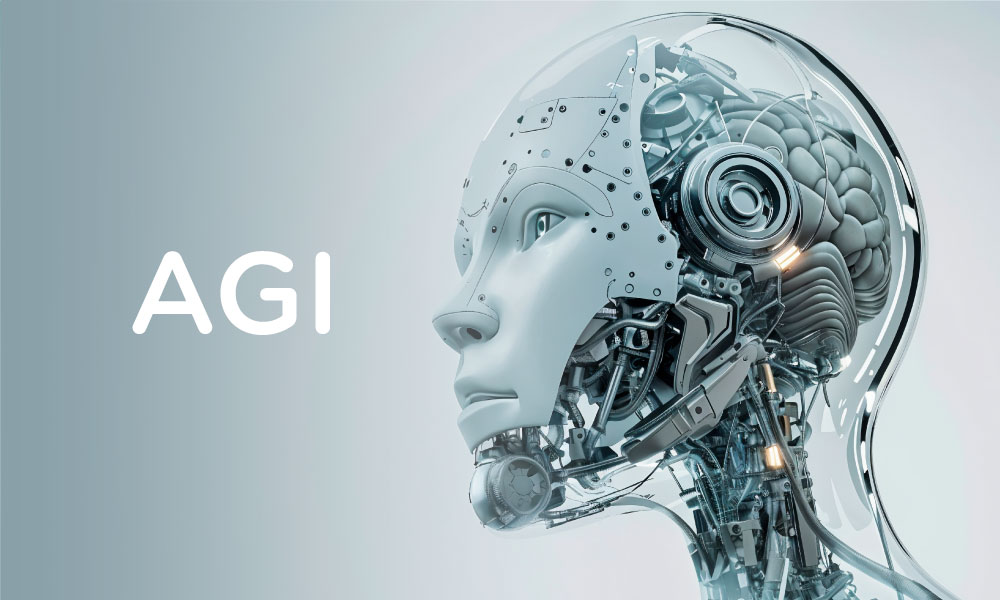
AGI (Artificial General Intelligence) is an artificial intelligence system capable of independently performing a wide variety of intellectual tasks much like a human. While narrow AI is typically specialized in a single task, AGI must possess the ability to comprehend knowledge across different fields, learn, solve problems, and adapt to new situations.
Full AGI has not yet been created. Although current models like ChatGPT, Gemini, or Claude can perform a vast array of tasks, they are not yet considered systems with human-level general intelligence.
When Might AGI Emerge?
Hassabis views AGI as a system capable of performing the core cognitive tasks that a human can do. According to him, around the time DeepMind was founded in 2010, he and company co-founder Shane Legg analyzed the growth rate of computing power and algorithms, predicting that achieving AGI would take about 20 years. According to Hassabis’s current estimates, AGI could emerge within the next five years, roughly by 2029–2030.
What is the Next Obstacle in AI Development?
Until now, the development of AI models has mostly relied on more data, more parameters, and greater computing power. In Hassabis’s view, this approach has not lost its significance, but simply increasing model size may not be enough for the next phase.
He emphasizes that compute is necessary not only for training models but also for testing new algorithmic ideas. Therefore, a shortage of computing power could affect the pace of AI research. Current models face several ongoing challenges:
- Continuous Learning — Once a model is trained, it does not continuously absorb new knowledge as a human does.
- Long-term Planning — It is difficult to consistently execute complex, multi-step tasks over long periods.
- Uneven Intelligence — An AI can solve a highly complex problem yet make mistakes on simple tasks.
Will AGI Transform the Labor Market?
Hassabis believes AGI may differ from previous technological waves in its scope and pace of development.
“Marc Andreessen and other venture investors argue that this time will be just like the past 10 technological waves (the internet, mobile communications, etc.) and that new jobs will be created. Yes, that is a historical truth. But this shift will be fundamentally different from any before.”
AI could dramatically boost productivity, but how broad segments of society will benefit from this growth remains a separate question. Hassabis highlights that pension funds and sovereign wealth funds could hold stakes in major AI companies. In his view, this would help distribute the economic value created by AI more broadly.
AI and the Energy Challenge
The growth of AI is increasing the electricity demand of data centers. At the same time, Hassabis notes that AI can help manage energy systems more efficiently.
DeepMind has conducted research on optimizing power grids using AI. Furthermore, AI can accelerate the development of new materials, more efficient batteries, and nuclear fusion energy technologies.
How Could AI Revolutionize Medicine?
Hassabis sees one of AI’s greatest opportunities in science and medicine. While DeepMind’s AlphaFold system has accelerated research into protein structures, Isomorphic Labs is advancing drug discovery processes using AI.
Hassabis predicts that within the next 5–10 years, drugs developed with the help of AI could reach clinical trials.
DeepMind’s location in London is connected to Hassabis’s view on Europe’s scientific potential. He believes the UK and Europe possess strong universities and academic institutions.
However, Europe lacks the massive capital required to scale tech companies into global giants. Thus, Hassabis considers it crucial for pension funds and institutional investors to direct more funds toward tech companies.
AGI is Not Just a Technological Issue
Closing the conversation, Hassabis stresses the need for international cooperation on AI safety. He compares such a global mechanism to the work of the International Atomic Energy Agency (IAEA). However, for him, the most vital questions surrounding AGI are philosophical rather than technological.
“Most people worry about the economic and technical problems of AGI. I think more about its philosophical questions. If we can correctly solve the technical and economic challenges, a different question will stand before us: What does it mean to be human? What is the meaning and purpose of life? To interpret this era, we will need a new generation of great poets and philosophers.”
— Demis Hassabis