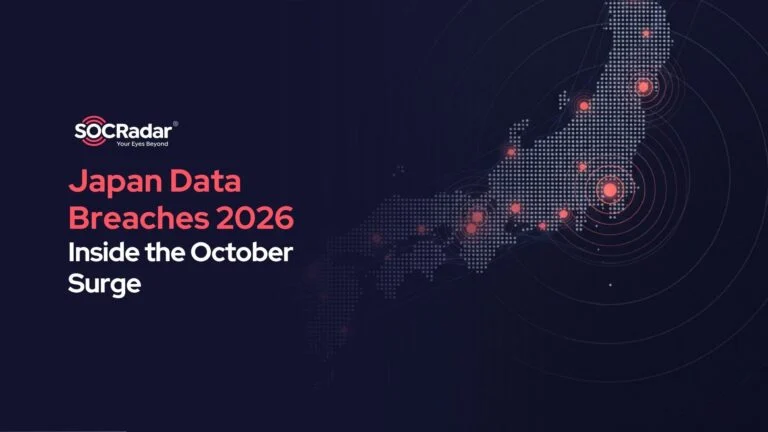
Japan has seen a series of cybersecurity incidents since late September 2026, with major companies across retail, transportation, travel and other industries reporting data breaches or unauthorized access. A ransomware attack on IDC Frontier, a cloud services subsidiary of SoftBank, disrupted services used by 495 companies and local government organizations.
According to cybersecurity firm SOCRadar, more than 20 major Japanese companies disclosed security incidents during this period. The incidents were not all part of a single attack, but the growing number of disclosures has raised concerns about the security of corporate systems, customer information and third-party technology providers.
IDC Frontier Ransomware Attack Disrupts 495 Organizations
On October 7, IDC Frontier detected a ransomware attack affecting its IDCF Cloud infrastructure in eastern Japan. Ransomware is a type of malicious software that can encrypt data and disrupt access to systems, sometimes accompanied by demands for payment.
The incident forced the company to isolate affected systems and suspend parts of its cloud service. The disruption affected 495 companies and local government organizations that relied on the platform. Some websites and digital services experienced outages as a result.
The incident also affected other businesses that used IDC Frontier’s infrastructure to operate their own services. This included railway operator JR East, which reported that customer information associated with approximately 6.09 million accounts may have been compromised.
However, the number of potentially affected accounts should not be confused with the number of confirmed data thefts. On October 14, IDC Frontier said an investigation conducted with an external cybersecurity firm had found no evidence that customer data stored by the company had been accessed or extracted without authorization.
Major Companies Report Potential Data Exposure
Several other Japanese companies have disclosed incidents involving customer databases, membership systems and online services.
- JR East: The railway operator reported that information associated with approximately 6.09 million customer accounts may have been compromised in connection with the IDC Frontier incident.
- JR Kyushu: The railway company reported potential exposure involving approximately 1.3 million customer accounts, also linked to the cloud service disruption.
- Bookoff: The secondhand retail group disclosed unauthorized access to a subsidiary’s membership management system, potentially affecting up to 6.43 million customers.
- Daiichikosho: The operator of the Big Echo karaoke chain reported a security incident involving a system managed by an external contractor. Information relating to approximately 8.72 million customers may have been affected.
- Skyticket: The travel booking platform’s operator, Adventure Inc., reported a potential breach involving approximately 14.64 million records following an attack on its servers and booking management system.
These figures represent the maximum or potential scope reported by the companies, rather than a confirmed count of stolen records. In several cases, investigations had not established whether the information had been accessed by unauthorized parties or subsequently misused.
Why Cloud Security Has Become a Major Concern
The IDC Frontier incident illustrates how a security failure at a single cloud provider can affect hundreds of organizations simultaneously. Companies increasingly rely on external infrastructure to host websites, manage databases, deliver emails and operate customer-facing applications.
When a shared service experiences a serious outage, the consequences can spread beyond the provider itself. Customers may lose access to systems, business operations may be interrupted, and organizations may need to investigate whether personal or confidential information was exposed.
Third-party software and contractors can introduce additional risks. A company may maintain its own security controls but still depend on the systems, access permissions and data-handling practices of its suppliers.
SOCRadar’s analysis also identified links between some attack infrastructure targeting Japanese organizations and ARTEX, a China-developed AI-based penetration-testing tool. This finding does not establish that the tool was responsible for every incident or that all the attacks were conducted by the same group.
What the Incidents Mean for Businesses
The recent incidents highlight the importance of assessing cloud providers and contractors as part of an organization’s overall cybersecurity strategy. Security measures should include strict access controls, regular software updates, protected backups and clear procedures for responding to incidents.
Companies also need to distinguish between service disruption, unauthorized access and confirmed data exfiltration. These are different outcomes, and each requires a separate investigation.
For customers, the most useful step is to follow official notices from affected companies. Users should remain alert to suspicious emails, calls and messages that may exploit a reported breach. Changing passwords may also be appropriate if a service confirms that login credentials were exposed, particularly when the same password has been reused elsewhere.
The incidents in Japan demonstrate how interconnected digital infrastructure has become. A vulnerability or attack affecting one provider can have consequences for multiple businesses, public institutions and millions of customer accounts.