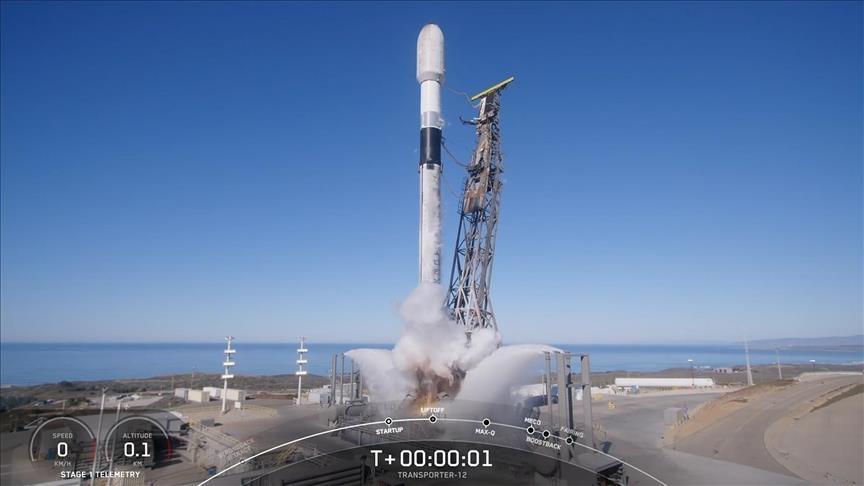
Kyrgyzstan has launched its first national satellite into orbit, marking the country’s first step into space-based Earth observation. The 5-kilogram nanosatellite was launched from California’s Vandenberg Space Force Base aboard a SpaceX Falcon 9 rocket on October 1.
The satellite was developed by a team of around 10 Kyrgyz engineers over approximately 2.5 years. The project cost about $130,000, making it a relatively low-cost entry into satellite technology.
The main purpose of the satellite is to monitor land and environmental conditions from space. Its data is expected to support agricultural monitoring, including tracking crops and pastures, identifying signs of drought and water shortages, and improving yield forecasts.
The satellite will also be used for disaster and environmental monitoring. Its imagery can help track changes in glaciers, forests, water bodies and pastureland, as well as assess the effects of floods, landslides, mudflows, wildfires and other natural disasters.
The project also envisages using satellite data to identify environmental violations, including illegal mining and unauthorized waste disposal. In the future, the collected data could be integrated into government digital systems to create spatial maps and analytical models.
The launch places Kyrgyzstan among the Central Asian countries developing their own capabilities in space technology. For the country, the project is not only about putting a satellite into orbit, but also about building local expertise in satellite engineering and using space-based data for agriculture, environmental management and disaster response.