

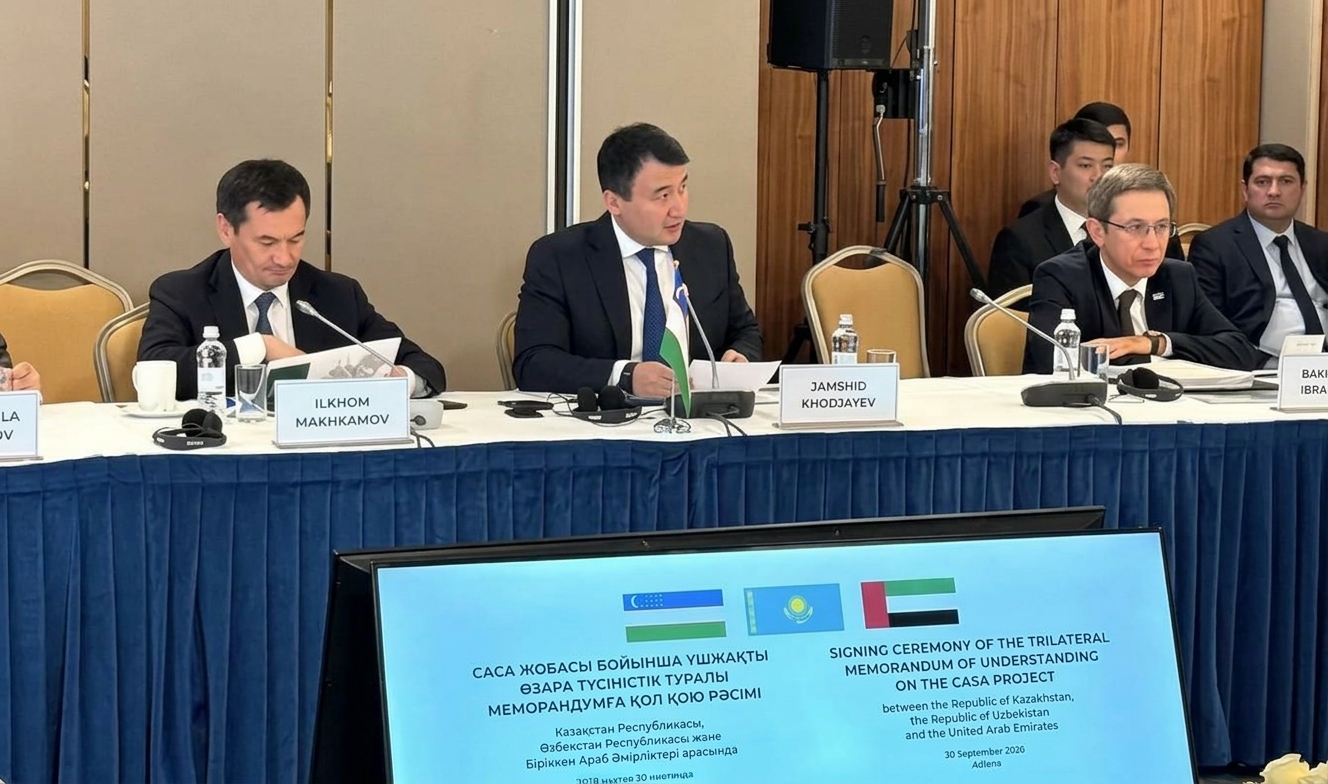
Kazakhstan, Uzbekistan and the United Arab Emirates have signed a memorandum to explore the feasibility of a railway corridor connecting Kazakhstan and Uzbekistan with Pakistani ports through Afghanistan. The project could provide landlocked Central Asian countries with an additional route to South Asian markets and the ports of the Indian Ocean.
The proposed CASA corridor — short for Kazakhstan–Uzbekistan–Afghanistan–Pakistan — would connect Kazakhstan and Uzbekistan with Pakistan through Afghanistan.
The route is expected to provide access to Pakistani ports, including Karachi and Gwadar, creating a potential new logistics link between Central Asia and international maritime trade routes.
The project’s significance is closely linked to the geography of Central Asia. Kazakhstan and Uzbekistan are both landlocked, so their international trade relies on transit routes through neighboring countries to reach seaports. According to the World Bank, the proposed railway could eventually create a route of around 3,000 kilometers from Tashkent to Gwadar.
Afghanistan occupies a strategic position between Central and South Asia, making it a potential transit link between the two regions. Uzbekistan has been working on a railway connection through Afghanistan to Pakistan for several years. In 2025, Uzbekistan, Afghanistan and Pakistan signed an intergovernmental agreement to develop a feasibility study for a railway connecting the three countries. The CASA project could expand this southern transport network by connecting it with Kazakhstan’s railway system.
The participation of the United Arab Emirates is one of the key elements of the new memorandum. The agreement was signed by the transport authorities of Kazakhstan and Uzbekistan and the UAE Ministry of Energy and Infrastructure. Kazakhstan’s government highlighted the UAE’s experience in transport infrastructure, logistics and large-scale investment projects.
At this stage, however, the memorandum does not represent a confirmed financial commitment from the UAE. The project’s financing structure is expected to be determined following technical, economic and financial assessments.
For Kazakhstan, the corridor could create an additional route for moving cargo southward toward South Asian markets. According to the Kazakh government, the broader CASA corridor could eventually handle up to 10 million tonnes of cargo annually, with shipments reaching Pakistan’s Karachi and Gwadar ports. This could give Kazakhstan another option alongside its existing east-west transport routes and strengthen its connectivity with South Asian markets.
For Uzbekistan, the project’s main significance lies in expanding access to international transport routes and seaports. The country is developing railway connections in several directions. The China–Kyrgyzstan–Uzbekistan railway is strengthening connectivity to the east, while the Trans-Afghan railway is intended to establish a southern route toward Pakistan.
The CASA corridor could connect these efforts with Kazakhstan’s railway network and potentially become part of a broader China–Kazakhstan–Uzbekistan–Afghanistan–Pakistan logistics route.
For now, the project remains at the feasibility-study stage. Its technical and economic assessments will determine the next steps and the potential structure of the corridor.








