

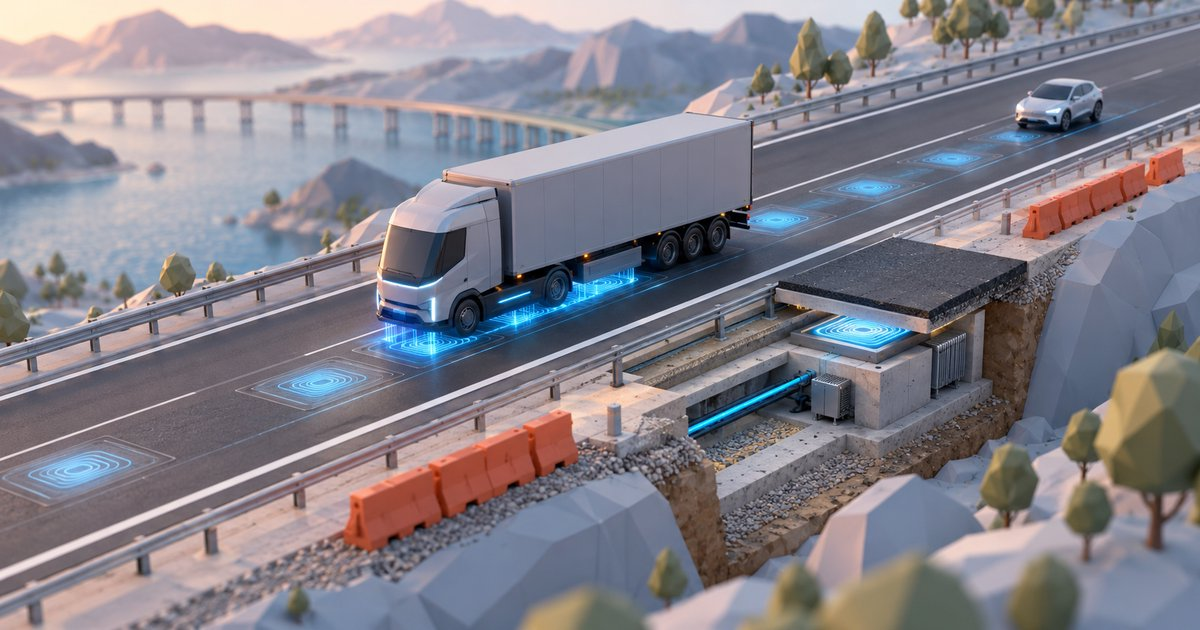
Honda R&D, Taisei Corporation and Taisei Rotec Corporation have developed an underlying technology that could allow electric vehicles (EVs) to charge wirelessly while driving.
The system uses wireless power transmission equipment installed beneath the road surface. A receiving device installed in the vehicle collects electricity from the road as the EV passes over the charging section. The technology is designed to enable continuous charging without requiring the vehicle to stop at a conventional charging station.
The companies are developing the system with a particular focus on large commercial EVs, including heavy-duty trucks. For these vehicles, frequent stops for charging can reduce operating efficiency and increase downtime. Dynamic wireless charging could potentially help address this issue by supplying electricity while vehicles are in motion.
Honda and its partners plan to conduct public-road demonstrations from fiscal 2027 as part of the Tateyama Project on the Tateyama Expressway in Chiba Prefecture, Japan. The project will be used to evaluate the technology under real-world road conditions.
The companies are also examining a system capable of delivering up to 150 kW of charging power. In addition to the wireless power transfer technology developed by Honda R&D, Taisei Corporation is responsible for the DC power supply system, while Taisei Rotec is working on technologies for installing the equipment in the road.
The development is part of efforts to explore new charging infrastructure for EVs, particularly for commercial vehicles that need to operate for long periods without lengthy charging stops.








