

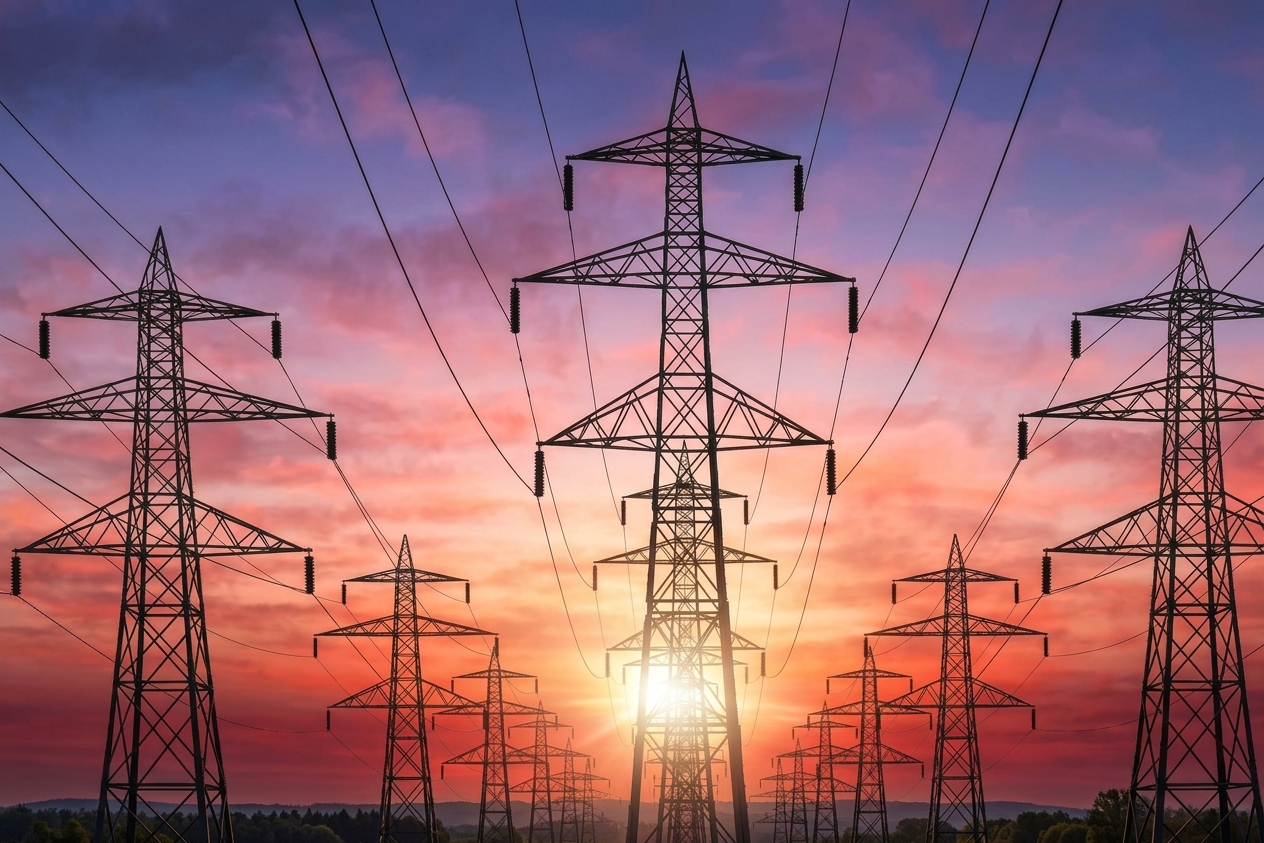
Uzbekistan is building a new 500 kV power transmission line connecting Nurobod district in Samarkand region with the Tashkent Ring substation. The 350-kilometer line will pass through Samarkand, Jizzakh, Syrdarya and Tashkent regions.
The project is part of a major energy development being implemented in Nurobod district in cooperation with Saudi Arabia’s ACWA Power. The project also includes a 1,000 MW solar power plant and a 1,336 MWh energy storage system.
The new transmission infrastructure will connect these generation facilities to Uzbekistan’s power grid. According to the Ministry of Energy, it will also increase the capacity to transmit electricity generated in the central regions toward Tashkent city, Tashkent region and the Fergana Valley.
Alongside the 500 kV line, a separate 150-kilometer 220 kV transmission line is also being constructed. Construction of the latter is reportedly around 50% complete and is expected to be finished in May 2027.
Together, the two projects will add around 500 kilometers of new transmission lines to the electricity network. The 350-kilometer, 500 kV Nurobod–Tashkent Ring line is scheduled to be commissioned in the first quarter of 2028. Construction is already underway, with foundations for the transmission towers installed and tower assembly in progress.
The project also uses a new type of support structure for the double-circuit 500 kV line. According to the Ministry of Energy, the design is being used in Central Asia for the first time and has been tested by India’s Larsen & Toubro.
The Nurobod solar plant and energy storage system will add significant new generation capacity to Uzbekistan’s power system. But producing more electricity is only part of the challenge — the grid must also have enough capacity to deliver it to major consumption centres.
The 500 kV line is designed to address this issue by increasing the capacity to transmit electricity from Nurobod toward the country’s major consumption areas.
This means the project is not simply about connecting one new solar plant to the grid. The additional transmission capacity is expected to strengthen the connection between generation in central Uzbekistan and demand in Tashkent and the Fergana Valley, while improving the overall reliability of electricity supply.








