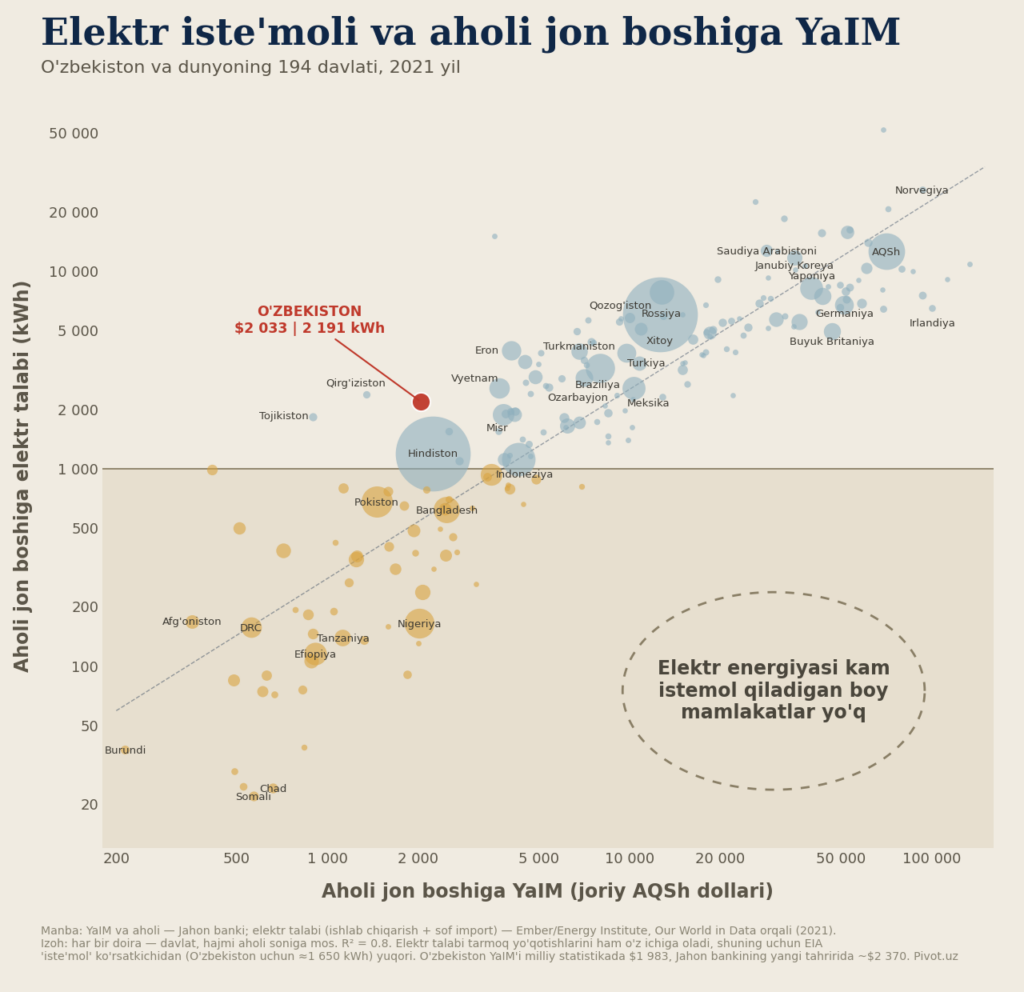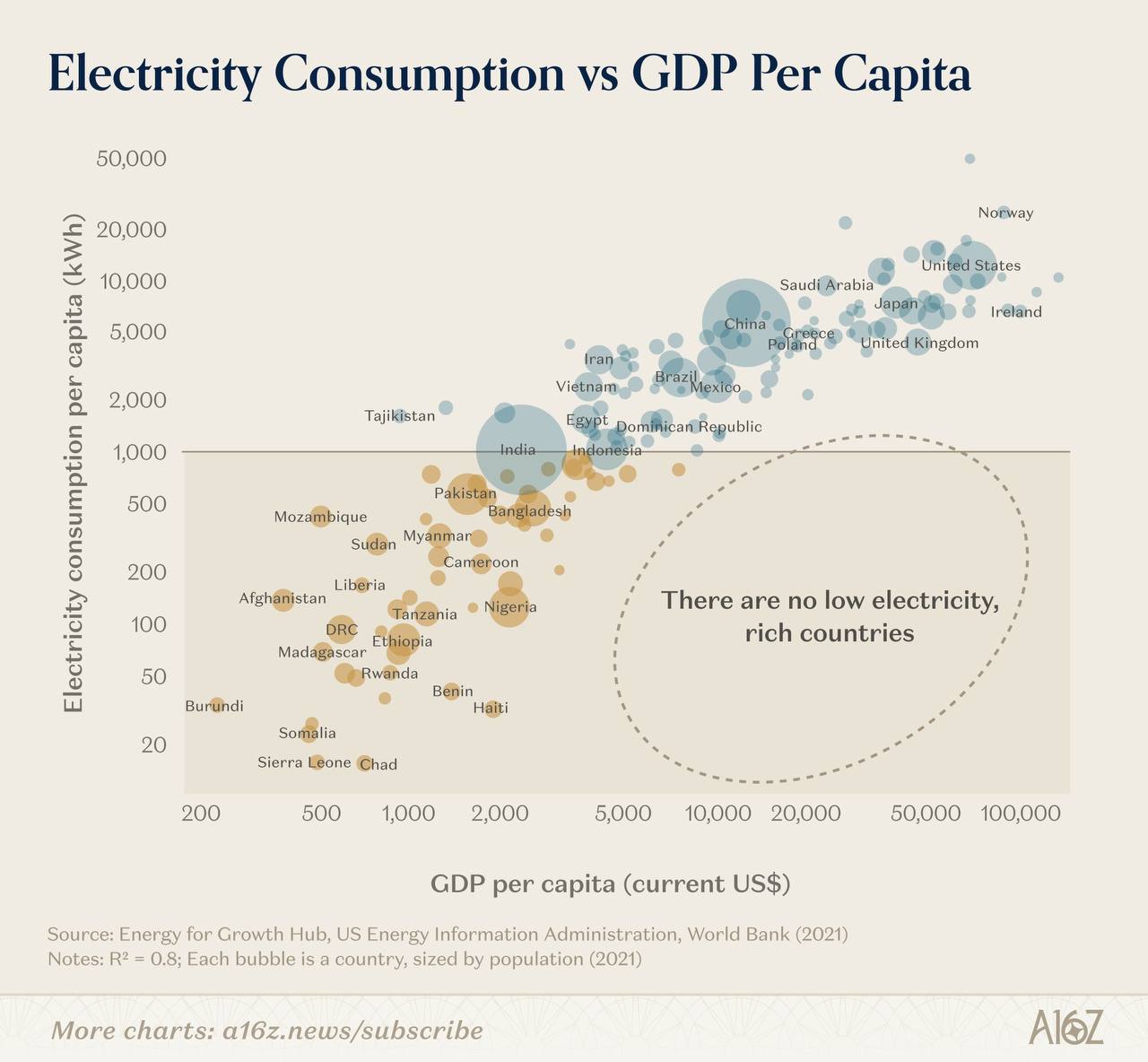
A graph published by a16z compares countries’ economic output with their electricity consumption. According to the graph, the wealthier a country is, the higher its electricity consumption per capita tends to be. In other words, as an economy develops, its demand for electricity generally increases.
This relationship can also be observed in Uzbekistan. According to World Bank data, the country’s electricity consumption per capita was approximately 1,473 kWh in 2010. By 2022, this figure had reached 2,094 kWh. Over the same period, GDP per capita in current US dollars increased from $1,957 to $2,699.
These figures show that Uzbekistan’s economic indicators and electricity consumption have grown together over the long term. However, this relationship does not mean that electricity consumption alone has caused economic growth.
Why is Demand for electricity increasing?
As an economy develops, manufacturing, the services sector and digital infrastructure expand. All of these require electricity. Rising household incomes also lead to greater use of household appliances, air conditioners and other electrical devices.
For Uzbekistan, this process is directly linked to industrial expansion, the opening of new businesses and the development of digital services. If electricity supply is insufficient or outages become more frequent, it becomes difficult to make full use of existing production capacity. For new projects, energy availability becomes one of the factors influencing investment decisions.
A country’s economic development cannot be assessed solely by its electricity consumption. Energy efficiency is also important: some companies can produce the same amount of output using significantly less electricity than others.
Electricity prices, grid losses, supply reliability and the ability to connect new consumers to the power grid also affect the economy. Therefore, alongside expanding electricity generation capacity, it is essential to modernize power grids and improve energy efficiency.
The development of artificial intelligence and data centers is making this issue even more pressing. Such infrastructure requires substantial computing power and a reliable electricity supply. In the future, Uzbekistan’s ability to attract new investment into its digital economy may also depend on the capacity and reliability of its energy system.