

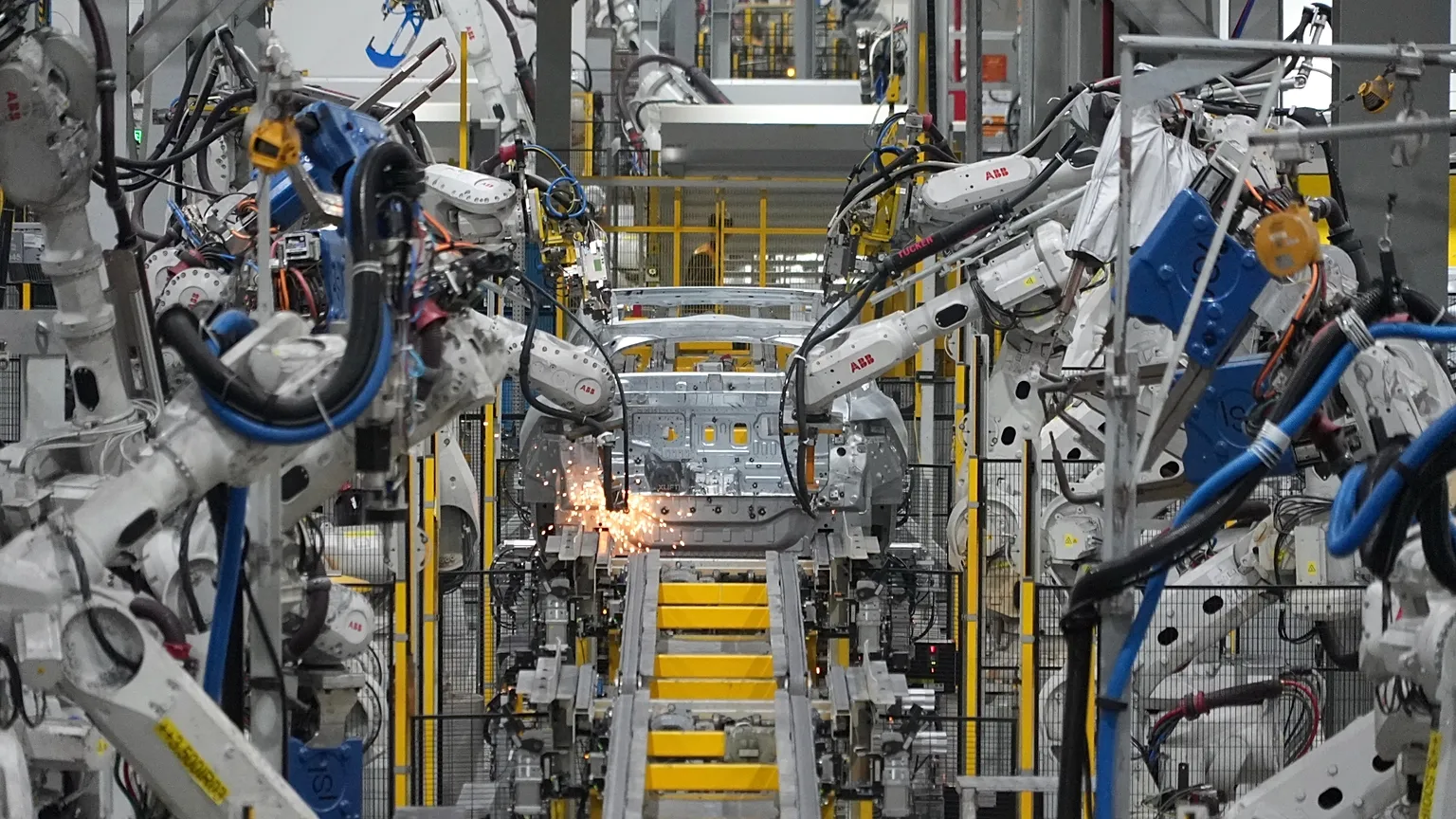
The number of industrial robots operating in factories around the world has surpassed 5 million. According to the International Federation of Robotics (IFR), more than 542,000 new industrial robots were installed globally in 2025.
The figure highlights the accelerating adoption of automation across the manufacturing sector. Industrial robots are being used in automotive manufacturing, electronics, metal processing, food production and other industries to perform repetitive, highly precise and continuous tasks.
Asia remains the leading region
Asia continues to dominate industrial robot adoption, accounting for the largest share of newly installed robots. China, Japan and South Korea remain among the world’s largest markets for industrial robotics, supported by their large manufacturing bases and continued investment in automation.
The growth is particularly visible in the automotive and electronics industries. Companies are deploying robots for tasks such as assembly, welding, packaging, material handling and quality inspection.
Robots are changing, rather than simply replacing, human work
The growing use of industrial robots is also changing the role of human workers in manufacturing. Robots are primarily used for repetitive and standardized operations, while employees increasingly focus on areas such as robot programming, system management, maintenance and more complex production processes.
The fact that more than 5 million industrial robots are now operating worldwide shows that robotics is no longer simply a technology of the future. It has become an established part of modern manufacturing infrastructure.








