Uzbekistan is preparing a new law on the capital market that would expand the range of financial instruments, strengthen investor protection and bring the country’s capital market regulations closer to international standards.
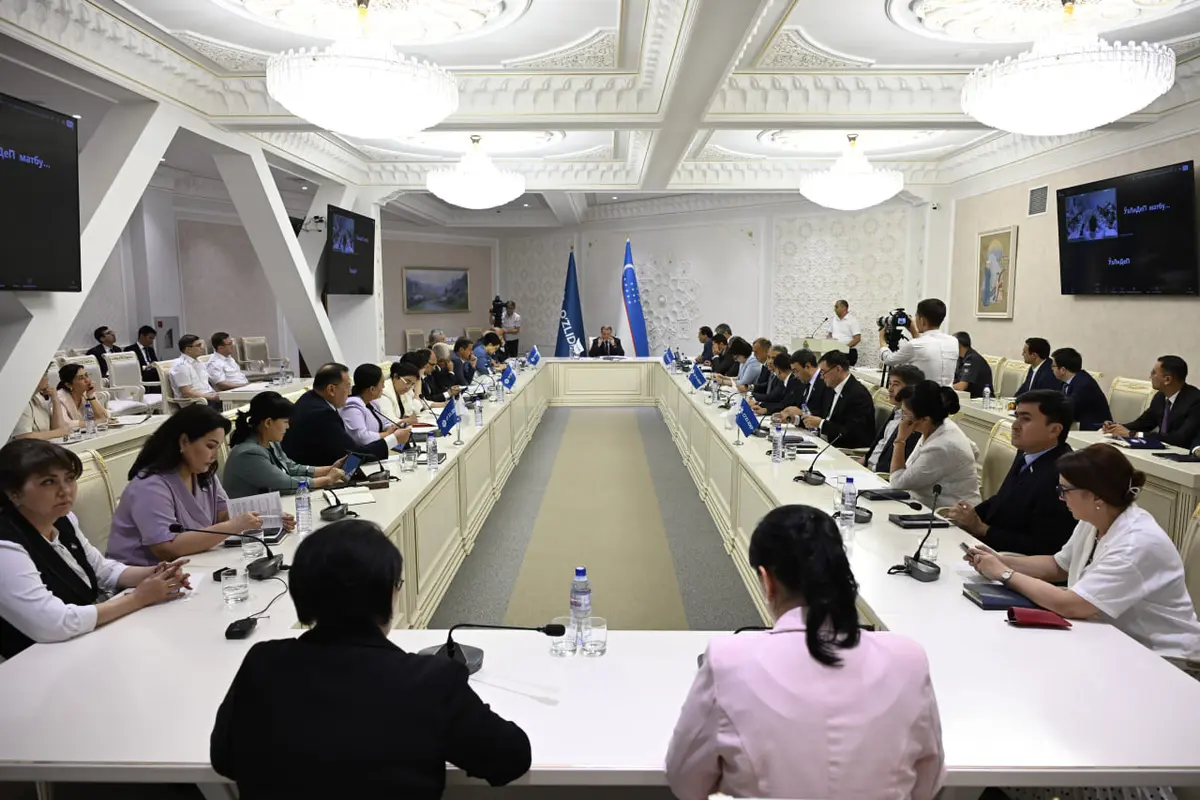
The draft law was discussed at an international roundtable in Tashkent on October 5. The event was organized by the National Agency of Perspective Projects (NAPP), the International Finance Corporation (IFC) and the United Nations Development Programme (UNDP).
The bill has already passed its first reading in the Legislative Chamber of the Oliy Majlis and is now being prepared for its second reading. The draft consists of 16 chapters and 123 articles. Its development took into account recommendations and practices from institutions including the EBRD, IFC, Asian Development Bank, Islamic Development Bank, UNDP, IOSCO and the U.S. Securities and Exchange Commission.
One of the main changes proposed by the draft law is an expansion of the financial instruments available on Uzbekistan’s capital market. The legislation would establish a legal framework for derivatives such as options, swaps, futures, forwards and contracts for difference.
It also proposes rules for covered and securitized bonds, sustainable finance instruments and bonds issued by international financial institutions. The draft also introduces a legal framework for sukuk, allowing Islamic finance instruments to be used more widely in the capital market.
These changes could give companies and financial institutions additional ways to raise funding beyond traditional bank financing. The draft also introduces new mechanisms aimed at protecting investors.
One proposal is to establish a representative institution for sukuk and bondholders. Such representatives would monitor issuers’ compliance with their obligations and help protect the interests of security holders.
Individual investors would also be divided into qualified and non-qualified investors based on their knowledge and experience. This would allow different requirements and restrictions to be applied depending on an investor’s level of financial expertise.
The proposed law would also introduce changes to the infrastructure supporting the capital market. In particular, it provides for the introduction of a central counterparty, which would participate in clearing transactions and help ensure that trades are completed. The powers of the Central Securities Depository would also be expanded. The institution would be able to centralize payments of dividends and interest, bond redemptions and mandatory buybacks of securities.
Custody services would be established as a separately licensed type of professional activity. The draft also provides for stronger regulation of rating agencies, management companies and investment funds.
Another part of the draft focuses on connecting Uzbekistan’s capital market more closely with international financial markets. The proposed rules would improve mechanisms for Uzbek issuers to enter foreign markets and create conditions for non-residents to place securities in Uzbekistan.
The draft also covers the issuance of bonds by international financial institutions in Uzbekistan, as well as instruments such as IPOs, global depositary receipts (GDRs) and securitization. This could make Uzbekistan’s capital market more accessible not only to domestic investors but also to international capital.
The new draft comes as Uzbekistan’s capital market is gaining greater attention from international investors. In May 2026, the Uzbekistan National Investment Fund (UzNIF) raised $690 million through an IPO on the London Stock Exchange. Total investor orders exceeded $2.8 billion.
The new legislation is intended to strengthen the domestic market infrastructure and investor protection framework as Uzbekistan seeks to expand such opportunities. The law is still a draft. It has passed the first reading and is being prepared for the second reading, meaning that its provisions may still change before final adoption.