

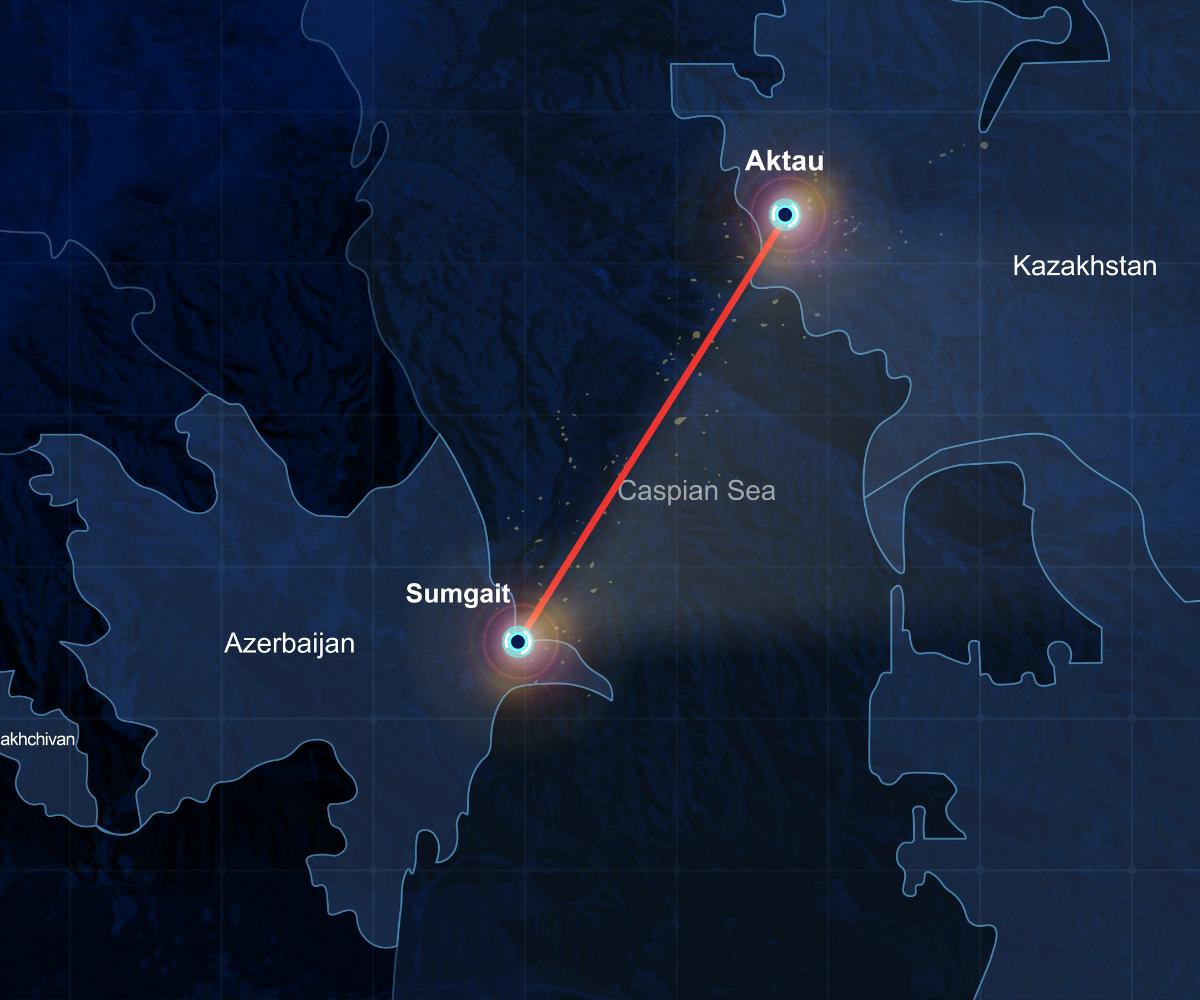
The submarine fiber-optic internet cable connecting Kazakhstan and Azerbaijan via the Caspian Sea is nearing completion. The project is expected to create a high-capacity digital link between Europe and Asia.
Earlier, we reported that Kazakhstan had launched a project to lay a fiber-optic cable across the Caspian Sea to Azerbaijan. The project is now moving into its final stage, with the Trans-Caspian internet cable expected to become operational within a month.
The project will establish a direct digital connection between Kazakhstan and Azerbaijan, enabling high-speed transmission of large volumes of data.
The new route could strengthen Kazakhstan’s role in transiting internet traffic between Europe and Asia. Azerbaijan, meanwhile, can use its existing infrastructure to connect the route to digital networks in the South Caucasus and Europe.
The project is also being positioned as a digital component of the Middle Corridor. The transport route connecting China with Europe through Central Asia, the Caspian Sea and the South Caucasus is increasingly developing beyond physical cargo infrastructure. The new cable could add a digital layer to the corridor by supporting the movement of data alongside goods.
For Central Asian countries, geography remains an important factor in connecting to global digital infrastructure. A submarine cable across the Caspian Sea provides Kazakhstan with an additional route toward the South Caucasus and European networks through Azerbaijan. This creates an alternative path for international data traffic and expands the region’s digital connectivity infrastructure.
For now, the focus is on bringing the project into operation. According to the latest announcement, the Trans-Caspian internet cable is expected to launch within a month.
The development marks a transition from the previously announced infrastructure project to its operational stage, potentially adding a significant digital dimension to the Middle Corridor.








